These hand-rolled Tunisian cookies hide a whole almond in a nutty cashew center. Inside: three fresh spins, plus answers to the questions bakers ask most often.
Ghriba is a family of hand-rolled, ground-nut shortbread that shows up, under a dozen different spellings, everywhere the Ottoman Empire once left its kitchens: Tunisia, Morocco, Egypt, the Levant, even Greece. This particular version swaps in cashews for the more common almond base, so you get that same sandy, melt-before-you-finish-chewing texture with a rounder, slightly sweeter nut flavor underneath. Ghriba shows up at Eid tables and alongside afternoon mint tea, usually because someone’s grandmother made a batch the night before and nobody asked permission to eat three. It’s a fitting one for us, honestly — classic recipes, reimagined is more or less what a nut swap on a centuries-old cookie is. One honest note before you start: this dough is a paste, not a batter, and it wants to be rolled while it’s slightly cool and a little tacky, not warm and loose, or the balls will spread flat instead of holding their shape. Once you’ve got the base down, there’s more than one direction to take it.
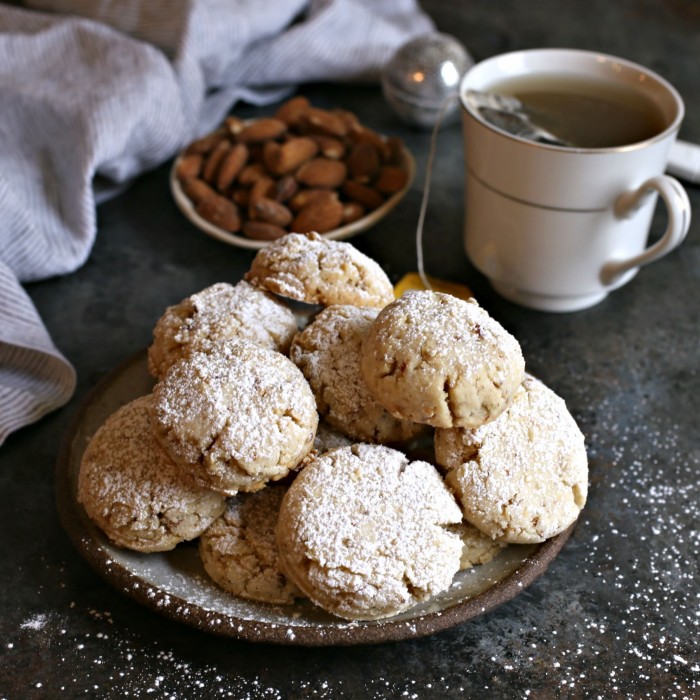
Cuisine: Tunisian | Category: Dessert
Ingredients
- 250g Cashew Nuts
- 100g Icing Sugar
- 2 Egg Yolks
- 2 tbs Orange Blossom Water
- To Glaze Icing Sugar
- 100g Almonds
Instructions
Preheat the oven at 180 C / Gas 4.
Line a baking tray with greaseproof paper.
In a bowl, mix the cashews and icing sugar.
Add the egg yolks and orange blossom water and mix to a smooth homogeneous paste.
Take lumps of the cashew paste and shape into small balls.
Roll the balls in icing sugar and transfer to the baking tray.
Push an almond in the centre of each ghribia.
Bake until the biscuits are lightly golden, about 20 minutes.
Keep an eye on them, they burn quickly.
Recipe data sourced from TheMealDB.
A Master Twist
Cashew ghriba is already a variation on a theme — the base recipe belongs to a nut-shortbread family that includes almond, walnut, and even sesame versions across North Africa and the Levant. Once you’ve made a batch the standard way, here are three directions worth trying.
The Pistachio-Cardamom Reserve
Swap half the cashews for shelled pistachios and add a pinch of ground cardamom to the dry mix. The pistachio brings a greener, more perfumed edge that plays well against the orange blossom instead of just doubling down on “nutty,” and the cardamom pulls the whole thing toward the spice profile you’d find in a Levantine bakery case rather than a strictly Tunisian one. Kitchen Intel: this kind of nut-swapping isn’t a stretch from tradition — Tunisia alone recognizes at least three parallel ghraiba families built on different bases, including a chickpea-flour version and a sorghum-flour one, so treating the nut component as interchangeable is very much in the spirit of the original. One thing to watch: pistachios grind wetter than cashews, so process them in shorter bursts and check the texture often — you’re aiming for the same dry, sandy meal as step 2 above, not a paste.
The Egg-Free Aquafaba Version
For a fully plant-based batch, replace the two egg yolks with 3 tablespoons of aquafaba (the liquid from a can of chickpeas) whisked until slightly foamy, plus one extra teaspoon of neutral oil to replace some of the richness the yolks were providing. The dough will be a touch softer, so chill it for a full 20 minutes before rolling. Kitchen Intel: ground nuts behave a lot like almond flour in gluten-free baking — they have no gluten network to hold a dough together, so whatever liquid binder you use is doing the structural work, not just adding moisture. That’s why swapping the yolks for aquafaba works reasonably well here (aquafaba’s proteins can bind in a similar way) but swapping them for something purely liquid, like more orange blossom water, would leave you with cookies that never hold their shape. Expect a slightly less rich, marginally more delicate cookie — still good, just not identical.
The Ma’amoul-Style Stuffed Twist
Instead of pressing an almond into the top, flatten each ball slightly, place a scant half-teaspoon of date paste in the center, and fold the dough back around it before re-rolling into a ball and coating in icing sugar as usual — you’ll lose the almond garnish here, so a light score across the top with a fork or the tines of a small mold gives the finished cookie somewhere to visually signal what’s inside. This borrows the stuffed-date logic of ma’amoul, a cousin dessert that shares the same nut-shortbread DNA.
Kitchen Intel: the wider qurabiya family the ghriba belongs to already stretches well past North Africa, into Balkan gurabija and Greek kourabiedes, which suggests these cookies have been quietly cross-pollinating with their neighbors for centuries — a stuffed version isn’t really a departure so much as a return to form. If you enjoy this kind of classic-bake-with-a-fresh-angle project, our reimagined take on cassava cake runs on the same instinct with a completely different base. One practical note: seal the dough fully around the date paste, or it’ll leak and caramelize onto the tray during baking.
FAQ
Can I make the dough a day ahead? Yes — wrapped tightly and refrigerated, the dough holds well for about 24 hours and is actually easier to shape once it’s had time to firm up.
What’s the best substitute if I can’t find cashews? Almonds, ground the same way, are the traditional base for this cookie family and swap in at a 1:1 ratio by weight.
Why is my dough greasy instead of dry and sandy? Almost always over-processed nuts releasing their oil — pulse in short bursts and stop the moment the mixture looks like fine, dry meal rather than paste.
What’s traditionally served alongside these? Mint tea or Arabic coffee — the bitterness cuts through the cookie’s sweetness and its heavy sugar coating.
Does “ghriba” actually mean anything? The word traces to the Arabic gharib, meaning “strange” or “exotic” — likely a nod to the cookie’s plain, rustic, cracked-top look next to fussier North African pastries, though the exact story varies by region.
Watch these cashews closely near the twenty-minute mark — they’ll go from perfectly golden to regretfully dark faster than you can find your oven mitts.
— Pepper Sage