This carrot cake bakes low and slow for over an hour, yielding a deeply spiced crumb and tangy icing, plus flavor directions and reader questions answered.
Carrot cake is a spiced, oil-based sponge built around grated carrots and finished in a tangy cream cheese icing — a British dessert with roots in a much older habit of sweetening cakes with vegetables when sugar was too expensive to waste. It’s the kind of bake that shows up for afternoon tea and birthday tables in equal measure, prized for a crumb that stays moist for days rather than drying out like a butter sponge does. Britain has quietly reworked this cake more than once: a wartime version promoted by the Ministry of Food to stretch rationed sugar, then a cream-cheese-topped version that didn’t really take hold here until decades later — which is a long way of saying “classic recipes, reimagined” describes carrot cake’s own history as much as it describes what we do to it. One honest note before you start: this particular recipe leans hard on oil, more than most versions you’ll find, so don’t panic when the batter looks slick — that’s the point, not a mistake. From here, there’s more than one direction to take it.
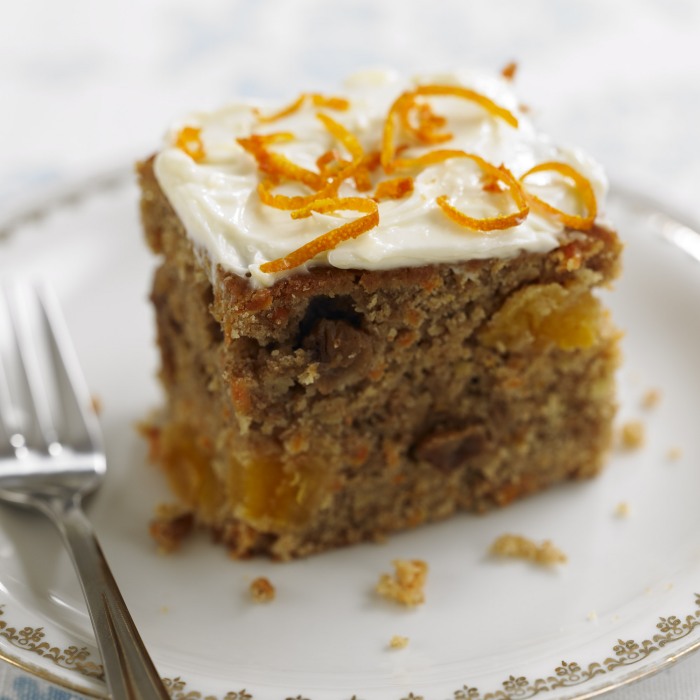
Cuisine: British | Category: Dessert
Ingredients
- 450ml Vegetable Oil
- 400g Plain Flour
- 2 tsp Bicarbonate Of Soda
- 550ml Sugar
- 5 Eggs
- ½ tsp Salt
- 2 tsp Cinnamon
- 500g grated Carrots
- 150g Walnuts
- 200g Cream Cheese
- 150g Caster Sugar
- 100g Butter
Instructions
For the carrot cake, preheat the oven to 160C/325F/Gas 3.
Grease and line a 26cm/10in springform cake tin.
Mix all of the ingredients for the carrot cake, except the carrots and walnuts, together in a bowl until well combined.
Stir in the carrots and walnuts.
Spoon the mixture into the cake tin and bake for 1 hour 15 minutes, or until a skewer inserted into the middle comes out clean.
Remove the cake from the oven and set aside to cool for 10 minutes, then carefully remove the cake from the tin and set aside to cool completely on a cooling rack.
Meanwhile, for the icing, beat the cream cheese, caster sugar and butter together in a bowl until fluffy.
Spread the icing over the top of the cake with a palette knife.
Recipe data sourced from TheMealDB.
A Master Twist
Carrot cake’s whole identity is built on the idea that a humble root vegetable can carry real sweetness and structure in a cake — which, once you sit with it, is basically an invitation to see what else can do the same job. We’ve reimagined a spiced root-vegetable bake before, in our take on cassava cake, and the same instinct applies here: treat the base recipe as a starting point rather than a fixed formula. Here are three directions worth trying once you’ve made the classic version at least once.
The Brown Butter Tahini Finish
Swap the plain butter in the icing for browned butter, and stir a couple of tablespoons of tahini into the cream cheese mixture along with it. Browning the butter first — cooking it past melted until the milk solids toast and turn a light amber, then cooling it slightly before beating it into the cream cheese — adds a nutty, faintly caramelized depth that plain butter can’t offer, and the tahini leans into that same toasted-sesame register instead of fighting it. One baker who’s built an entire recipe around this combination describes the pairing as giving the cake more of a Middle Eastern flair, which tracks — tahini’s bitterness is a genuinely useful counterweight to a cake this sweet. If you want extra crunch on top, crumble in a handful of our cashew ghriba biscuits instead of the usual chopped walnuts; their sandy shortbread texture holds up better against the icing than raw nuts do.
Kitchen Intel: Browning butter is a genuine Maillard reaction between milk proteins and sugars, not a flavoring trick — it’s the same chemistry that turns a seared steak crust brown, just happening in a saucepan of fat instead.
Watch for: Brown the butter in a light-colored pan so you can actually see the color change, and pull it off the heat the moment it smells nutty rather than waiting for a deep color — it keeps darkening for a few seconds off the heat too, and the gap between “browned” and “burnt” is short.
The Cardamom Gajar Halwa Loaf
This one borrows from gajar ka halwa, the North Indian carrot dessert that shares more DNA with British carrot cake than you’d guess at first glance — both lean on grated carrot, warm spice, and a fair amount of fat to carry flavor. Swap the ground cinnamon for crushed cardamom seeds, stir a handful of golden raisins in with the carrots, and top the finished cake with a brown-sugar buttercream instead of a straight cream cheese icing — beating soft light brown sugar into the butter before folding in the cream cheese, rather than creaming plain caster sugar. One version of this fusion, developed for delicious. magazine, finishes the loaf with a scatter of chopped pistachios and suggests it alongside Indian sweets and a pot of tea rather than as a stand-alone dessert, which changes how you’d plate and serve it.
Kitchen Intel: Cardamom’s aromatic compounds are more volatile than cinnamon’s, meaning they read as brighter and more perfumed in a warm cake rather than purely “spiced” — it’s a genuinely different flavor category, not just a stronger version of cinnamon.
Watch for: Crush the cardamom seeds yourself rather than buying pre-ground; ground cardamom loses its aromatic edge fast, and the pre-ground jars sold in most supermarkets have often been sitting a while.
The Greek Yogurt Lightened Remix
If the 450ml of oil in the classic version feels like a lot — and by most standards, it is — this is the version to reach for. Replace roughly two-thirds of the oil with full-fat Greek yogurt, keeping the remaining third as oil so the cake doesn’t lose all its tenderizing fat. One baker who’s tested this swap extensively recommends Greek yogurt between 2% and 10% fat for the job, noting that it replaces the majority of the oil while keeping the crumb moist rather than drying it out the way a straight water-based substitute would. For a version that goes further, a whole-wheat take built around olive oil and honey swaps in whole wheat flour and skips the cream cheese icing for a dusting of powdered sugar instead, which is worth trying if you want something closer to a snacking cake than a dessert-table centerpiece.
Kitchen Intel: Yogurt swaps work because they replace fat with a mix of water and protein rather than pure fat — you lose some of oil’s tenderizing effect, but the yogurt’s tang and moisture largely cover for it, especially in a cake already this spiced.
Watch for: Don’t swap out all the oil. A completely fat-free version turns gummy and dense rather than light, since the yogurt alone can’t do oil’s full job of coating the flour’s gluten strands.
FAQ
How far ahead can I make this cake? The sponge can be baked a full day in advance and left wrapped at room temperature — it actually tastes better for the rest. Ice it the day you’re serving it for the cleanest presentation.
Can I use pre-shredded or frozen grated carrots? Pre-shredded bagged carrots tend to be drier and can leave the cake less moist than freshly grated ones; frozen grated carrot works in a pinch if thawed and well-drained first, but neither matches carrots grated just before mixing.
Is carrot cake actually a healthier dessert? Not meaningfully — the cake in this recipe runs on 450ml of oil and 700g of combined sugar, so the carrots add moisture, flavor, and a bit of fiber, but they don’t change the cake’s overall calorie or sugar profile in any significant way.
My cream cheese icing came out runny — what happened? Almost always low-fat cream cheese or butter and cream cheese at mismatched temperatures. Use full-fat cream cheese, beat the butter smooth first, and chill the finished icing briefly if it still feels loose before spreading.
What pairs well with a slice of this? A strong, slightly bitter drink cuts through the sweetness nicely — black coffee or a well-steeped cup of tea both work better here than anything sweeter alongside it.
Between the oil quantity and the icing on top, this cake was never really pretending to be the “healthy” option — it just had a vegetable good enough at its job to make everyone forget to ask.
— Pepper Sage